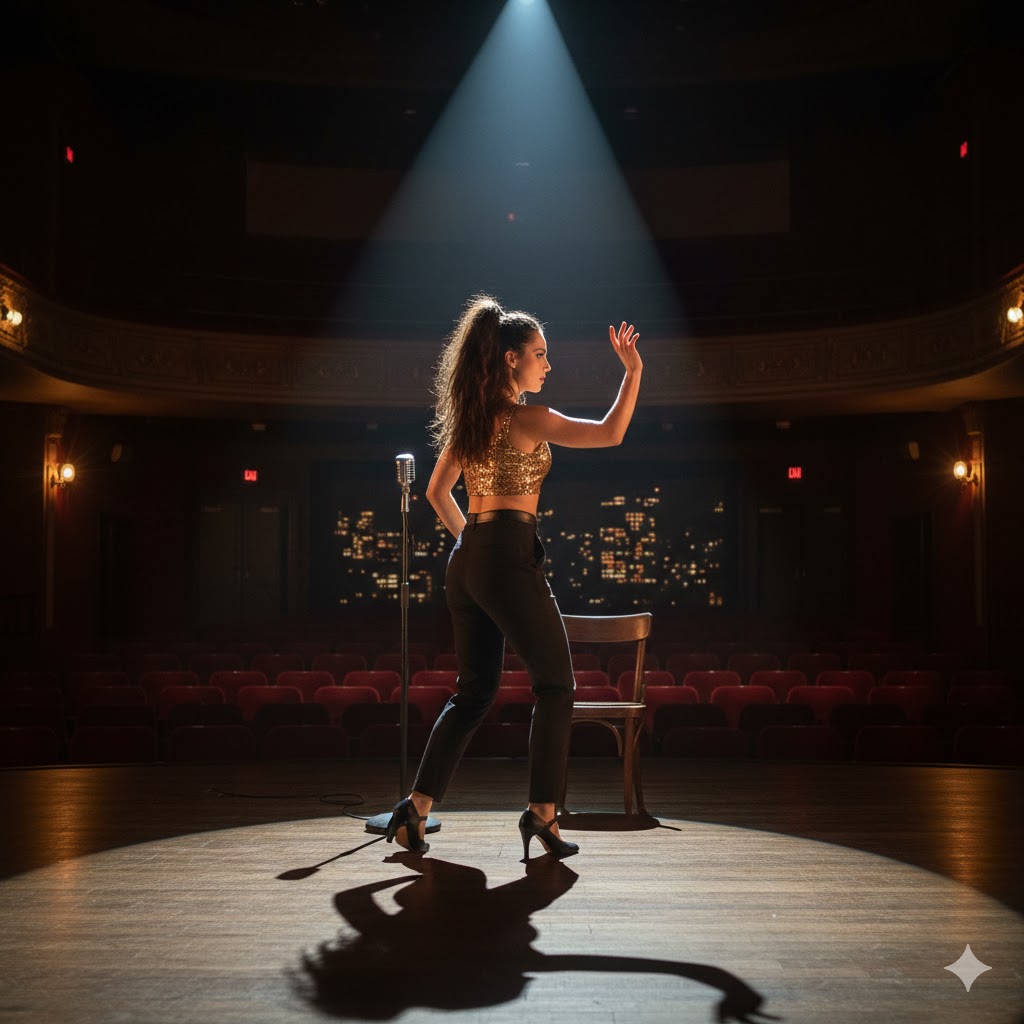
Dyslexia is often talked about in terms of reading and writing, but the reality of being neurodivergent in higher education goes much deeper. In this guest blog, one student shares their honest journey—from the stress of auditions and the frustration of needing expensive diagnostic reports to the unexpected challenges of supermarket scanners and laundry labels. This is a story about the “life skills” gap that many students with dyslexia face when moving away from home for the first time:
My journey
The dream started many years ago. I have danced, sang, and performed since the age of three. As I went through school, I wondered what I may do as a career, but as my passion grew for dance and singing, I realised this is what I wanted to do.
But would I be able to achieve this?
The First Hurdles
GCSEs: The first hurdle was passing my GCSE in English and maths. For me, this was massive, but I did it with extra help from tutors and family. I got there.
BTEC: I then went on to do a BTEC in Dance; because this was practical, the coursework was easier to manage. I passed with two distinctions and a merit.
The Audition Process
The degree dream had started: the process of learning a dance, a song, a monologue for auditions, and filling in all the applications.
The Easy Part: The dance and the song were the easy part, as this is done via muscle memory and I find this easier.
The Challenge: The monologue, however, was a challenge. Not only for me is it remembering all words, it’s remembering them in the right order and learning what they mean—which may sound obvious, but for someone with Dyslexia, this is hard.
The Paperwork: Then the applications—all confusing. Some independent, some UCAS. Where do I start?
I rely on the help of my college tutors and my parents to guide me through this; making sure my spelling is correct, that I understand the wording, and understand what they want me to write in my personal statement.
“Will They GET ME?”
Will they get me? What do I disclose? We go through the open days speaking to the staff. Some places I already felt alone, but some stood out instantly, reassuring me that there would be support.
So my auditions start. It’s not just worrying about the audition, it’s worrying about:
Where it is
The timing of getting there
Understanding the instructions when I get there
Throughout these auditions, I see many girls turn up on their own, but I have my support with me: my parents, my safety blanket.
Finding The Right Fit
At the auditions, I get great feedback. I get offers on the day and offers within the week of the audition. My dream was Addict Dance. Not only did I feel at ease there and liked the surroundings, but Gareth (the principal) got me. He understood my issues and my learning needs, and this gave me reassurance that I would be okay.
Fortunately, I did get the offer I wanted from Addict: a BA honours degree in Musical Theatre and Dance. I accepted.
The Paperwork and Hidden Hurdles & Costs
Then the forms arrived. Finances, accommodation, contracts… at this point, my brain was blown. I struggled to read it, let alone understand it, so yet again my parents helped out.
We applied for Disabled Students’ Allowance (DSA), thinking this would be the help I needed. But then the letters started coming back. They wouldn’t accept my school or college assessments. They told me I needed a “Full Diagnostic Report” from a practitioner psychologist or a specialist teacher with a specific certificate.
It felt like another hurdle. To get the report they wanted, we’d have to pay £965 for a private psychologist—and even then, they told us it didn’t guarantee I’d actually get any help. It feels like you have to pay a fortune just to prove you struggle.
It’s not just the reports, either. Because of my dyslexia, I need blue-tinted lenses to help me read. The NHS only covers basic frames. I have to privately fund my own sight tests and the special blue lenses myself. It’s another “hidden cost” of being me.
The Reality of Living Independently
I go through it: How do I live on my own? For some, this may seem a little thing, but to me, this is massive. I do the nice things: buying the things for my room to make it feel like home, starting to think about what I need to take with me and what I will use.
I arrive in September. We unpack, make it feel like home, buy the shopping, and I’m settled in. My parents leave and I’m on my own. Excited, frightened, emotional—lots of thoughts running through my head. So many tasks that I now am responsible for… it’s quite overwhelming.
The “Little” Challenges (That Are Actually Massive)
- Where am I? Where do I live? What’s my address? What’s around me?
- Logistics: How do I get to college? How do I get to work? Where’s the shop?
- The Room: My studio—how do I work the oven? The hob? The shower? Where is the fire point? How do I connect the Wi-Fi?
And there’s more forms! Am I happy with my accommodation? A snagging list? Faults? All this before I even start my course. I keep saying it, but thank heavens for FaceTime and parents. Even little things—save my new address in my phone, my room number—it’s all memory skills. So many sets of instructions and terms and conditions; lots of it I don’t understand, so now I’m worrying that I’m agreeing to something I don’t really know.
Starting the Course
The first day: lots of introductions. I’m reassured, I make friends. The tutors seem nice; they offer support and everything is going well. There are more forms, which some I struggle to fill in. I will do these later on a FaceTime call to my parents.
Real Life: Shopping and Laundry
The first week flies by. I’ve had to find my way to my new workplace—the same job just different people. Different people to explain to about my dyslexia and how it affects me.
- Supermarket: I’ve never done a food shop on my own. How much do I buy? I have to read the dates. Make sure I won’t waste it. So many different brands of the same thing and pricing. I use the handheld scanners—this is great. It’s adding up everything I’m picking up so I know I’m within budget.
- Launderette: This might sound silly to some, but reading the washing machine instructions is not just a two-minute job for me. Then checking my labels on my clothing for the instructions again… it’s not a two-minute job.
Survival and Reflections
I’ve survived. I’ve survived my first week. Sometimes it’s the little things. I have brought my blue paper with me to print on, so this makes things far easier for me.
My dyslexia is quite severe—when assessed I was 99%. Many people still think it’s just reading and that’s it. Reading is only one factor:
- I struggle with the speed that I read.
- I struggle with understanding the words and the meanings.
- My memory and retention of data—I have to keep repeating to try and get information to stick.
Socially, I am conscious of this, as often others come across to me as more intelligent than myself as I often don’t know what things mean or even how to do things. I am appreciating my parents more now and realise how much they did for me.
The Verdict
My first term has flown by. The hardest part isn’t the degree course—it’s the life skills, the forms, the day-to-day living. There’s no support for the day-to-day living and no “check you are ok?”.
Addict are fully supportive with the education, but obviously, this stops within the academic work. As I am finding out, university is much more than academic learning; it’s life skills that I am learning, and there is very little support for the “life” side of dyslexia.
Note from Triple A Performer: Thank you to the student for sharing this valuable lived experience. Her story highlights the “hidden hurdles” of navigating life with dyslexia in higher education and reminds us that support for everyday life skills is just as vital as academic help. We wish her every success in her journey with Addict Dance and beyond.
Your Voice Matters Are you a student looking to attend a higher education setting to continue your learning and development in the performing arts? We want to hear from you. We are running a survey to learn more about your unique experiences and the challenges you face during this transition. By sharing your story, you help us advocate for better support and a more inclusive environment for future performers. Please take a few minutes to complete our survey here: https://www.tripleaperformer.uk/2025/04/22/make-your-voice-heard-share-your-journey-in-performing-arts-education/